Study the past, build the future: Auburn History prepares students to be changemakers
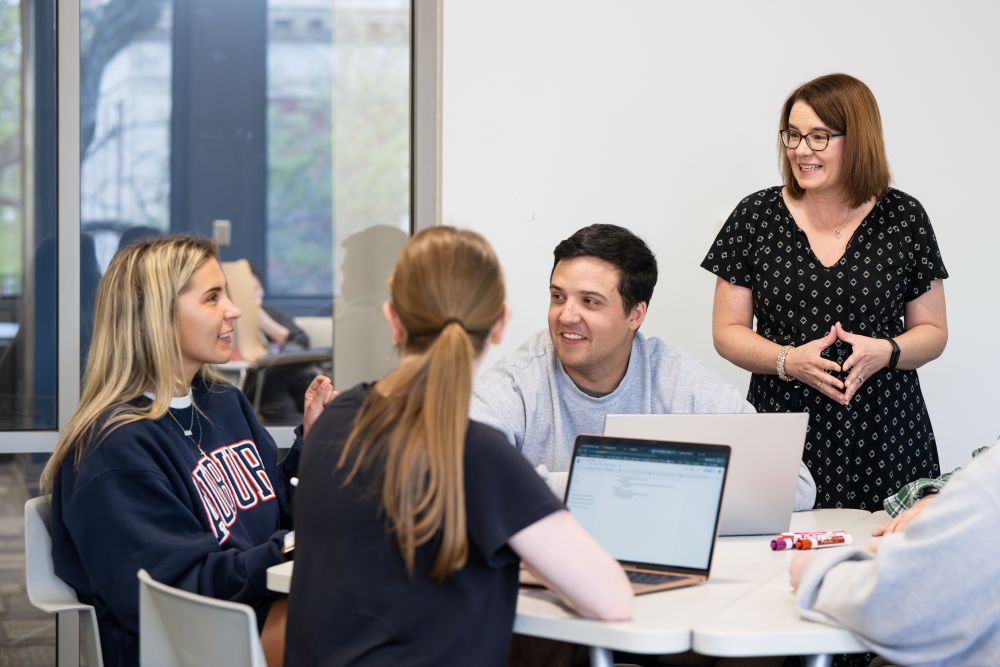
As the world changes, Auburn History students know what stays the same and what they can change for the better. In 2026, the department celebrates another banner year for graduate enrollment, post-graduate placement and student and faculty excellence.
“Auburn History’s goal is to help our students develop a flexible set of thinking and communication skills that can be used in a huge range of careers, while exploring topics in history that they love,” Department of History Chair Melissa Blair said. “On the research side, our faculty are dedicated to improving our understanding of the past by asking new questions, exploring new archives, and using new methods to learn and share with the public a more accurate understanding of peoples and places in the past.”
Whether those people and places are ancient Babylon, early modern Europe, the 20th century U.S. or any time or place in between, Blair said everyone can benefit from learning about the cause and effect of events in the past to make more informed decisions about the present and future.
In a survey conducted by the department over the winter, the majority of students who responded said majoring in history has been a good choice. Students said they declared the major because they loved taking a variety of classes with helpful professors and small class sizes, and because it complements other majors so well.
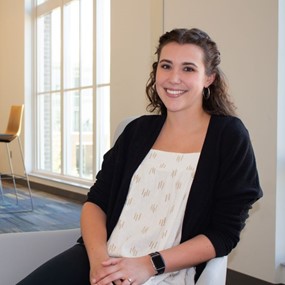
Tieran Sullivan, majoring in Biomedical Sciences and History, plans to attend medical school after graduating from Auburn. She said her double major has taught her important skills essential to clinical decision-making, communicating complex ideas to patients and how society, culture and health care are connected.
“My background in history complements my biomedical sciences education by making me a more thoughtful, analytical and empathetic future physician. It has prepared me to not only understand the science behind medicine, but also the human experiences that shape health and health care outcomes.”
Tieran Sullivan

Sullivan originally chose to add history as a major because of her lifelong passion for the subject, as well as to honor her grandfather, whom she said brought the past to life with his enthusiasm about early automobiles and modern American history.
Once she was in the department, Sullivan enjoyed traveling abroad to the places where history unfolded and participating in discussion-based courses to meaningfully engage with complex topics that impact the world today.
“What stands out most is how the department encourages students to apply historical understanding to real-world challenges,” Sullivan said. “It has empowered me to think more thoughtfully about my role in society and how I can contribute to meaningful change. The skills and perspective I have gained will continue to influence both my academic and professional path, allowing me to make a more informed and impactful difference in the world.”
Another reason Sullivan recommends History is its small class sizes, which allows students to receive one-on-one mentorship from their professors. History faculty are often recommended by previous students because of their support in class and transformational impact on the field.
One of the department’s transformational teachers is Draughon Associate Professor of Southern History Kelly Kennington. In 2024, the National Endowment for the Humanities supported her with a fellowship grant for her latest work, "Womanhood, Insanity, and Consent in the Nineteenth-Century South."
The book’s investigation into mental illness, gender and law in the American South was recognized as a significant contribution to the field of Southern history, but beyond that, Kennington said the fellowship makes her a better instructor.
“High profile fellowships like the NEH Faculty Fellowship I held last year offer me time and space to accomplish my research and writing goals, which ultimately make me a better teacher as well,” Kennington said. “I bring the lessons I learn in my own research to students in classes, offering examples of my methods for finding primary sources, incorporating the work of other historians, and crafting a historical question and argument.”
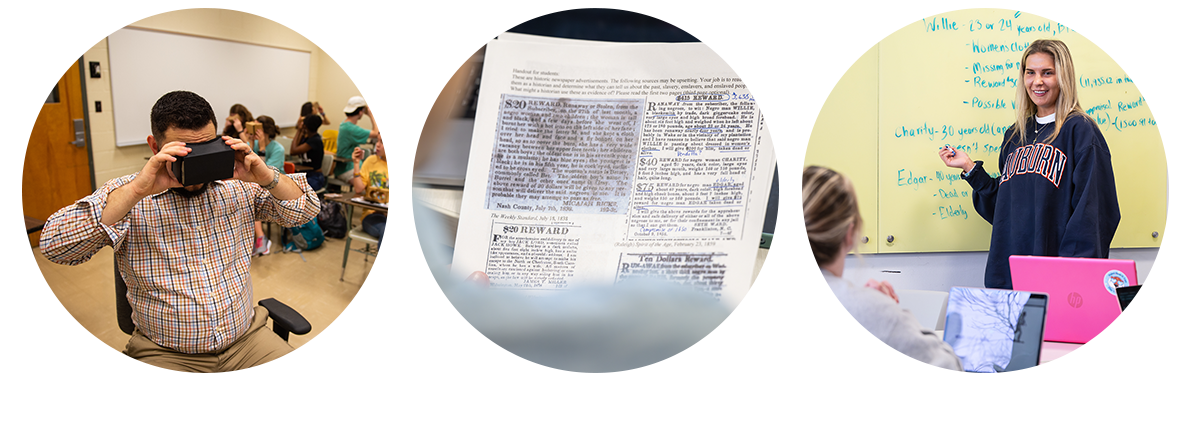
Kennington is one of four History faculty who have secured major national and international fellowships within the past two years.
Others include Associate Professor Adam Domby’s Kemble Fellowship at The Huntington Library to study Black sailors’ role in the American Civil War, Associate Professor Xaq Frohlich’s Binational Commission for Educational Exchange between Denmark and the USA Distinguished Scholar in American Studies Grant to study cultural food branding in Denmark and Associate Professor Monique Laney’s fellowship from the Israel Institute for Advanced Studies at the Hebrew University of Jerusalem.
Every individual award is celebrated by the whole department because of its supportive culture. Kennington said she’s never hesitated to ask colleagues for help, advice or to share work.
“The Department of History is highly supportive of my research and teaching work,” Kennington said. “Colleagues routinely observe each other teaching, share syllabuses and talk about ideas for classes. It is a great place to work. My colleagues are wonderful collaborators and supporters of one another's work and teaching, and I love that.”
Faculty excellence is a major component of graduate school recruiting. Applications to History’s graduate program, which set another record in 2025, get more competitive each year.
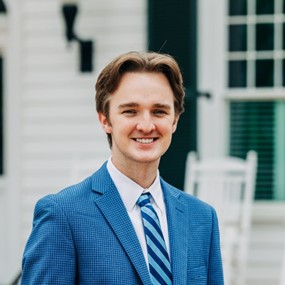
Chase Stephens ’24, a history doctorate graduate and records management archivist at the Alabama Department of Archives and History, chose Auburn specifically to work with its faculty. His advisors, Professor Jennifer Brooks, Associate Professor David Carter and Draughon Professor of Southern History Keith Hébert, are all nationally recognized for their work on the American South.
“My professors at prior institutions were familiar with several Auburn professors’ work and spoke highly of the quality education I would receive if I managed to make it into the program,” Stephens said.
The professors will challenge and push you to be the best version of yourself. Even if you do not think that version is there, they can see the unmolded clay. They wouldn't have let you in if they didn't think you had potential that just needed to be unlocked. ~ Chase Stephens '24
Records Management Archivist, Alabama Department of Archives & History
Other recent graduate program alumni work at the Columbus State University Archives, 9/11 Memorial and Museum, the University of Montevallo, the Foundation for the Defense of Democracies and alongside Stephens at the Alabama Department of Archives and History.
Stephens’ role includes communicating with and training state and local government employees on best records management practices. He said he uses what he learned at Auburn every day.
“My time at Auburn provided me with extensive research, writing and communication skills that aid me on a daily basis,” Stephens said. “A large portion of my work requires combing through state and federal code to determine if there are specific legal requirements we must adhere to when assigning records retentions. Auburn's professors taught me those skills, and I will forever be grateful.”
The unemployment rate for history majors is lower than studies such as graphic design, pharmacy and computer science. Beyond museums, archives or teaching, history graduates also find success in management, law, business and publishing. History prepares each student with skills in adaptability, writing, reading and problem-solving – all top skills sought by employers.
With a set of transferable skills that work across all disciplines, Chair Melissa Blair said students graduate prepared to make their own history.
“History doesn’t exactly repeat itself, but it’s a powerful tool to learn about how decisions that people have made in the past have worked out – who they have benefitted, what they have achieved, what they have not accomplished,” Blair said. “That doesn’t mean it will go the same way this time, but it gives you hints of what some of the opportunities and problems are with a particular approach.”
Learn more about the Department of History at the College of Liberal Arts website.
Tags: History Students Alumni Faculty Research

Related Articles
-

Auburn alumnus named executive director of Alabama Writers’ Forum
Richard Kent Evans '11 has been appointed executive director of the Alabama Writers’ Forum. -

Theatre & Dance presenting ‘Monstersongs,’ a spooky seasonal adventure in black box theater
"Monstersongs" is a spooky adventure that asks audiences to consider things from a new perspective and get the story behind the scare. -
Auburn doctoral student developing writing therapy for students facing microaggressions
Cassidy Brydon, a doctoral candidate in clinical psychology, is developing the first culturally sensitive expressive writing model, specifically for people who experience microaggressions. -
Aviation management student receives highly competitive scholarship
Torr Coulthard, who is also studying French and business, plans to work in the aviation sales or finance industry after graduation. -

Liberal Arts Young Alumni Council accepting applications through August 1
The CLA Young Alumni Council advances, advocates for and supports the student experience. -

Undergraduate Gulf Scholars Program Seeks Student Applications
Gulf Scholars will be recognized nationally by the National Academies of Science, Engineering and Medicine and can earn a minor in sustainability studies.